
Young Botshabelo Farmers Learn about Climate Change through Film
 Preview attached
- Regional Development: Direct policy and economic implications affecting Free State residents and commerce.
- Key Summary: The workshop also sought to equip young farmers with practical methods for documenting climate-related losses using their smartphones, allowing them to present evidence when seeking assistance from government and private sectors. The event drew 67 community members, primarily young people, many of whom were vegetable farmers and community members keen on food security, environmental issues, and climate action. Attendees actively engaged in discussions and practical activities, highlighting their vital role in building climate-resilient communities.
- Timeline: Published on 2026-11-23 16:36 by Free State World newsroom correspondents.
Agnes Mokhele, a young mixed farmer, food security activist, and community developer from Botshabelo, recently hosted the "What Seeds Grow Here?" campaign, which featured a Climate Action Lab film screening and workshop at the Boitelo Art Centre on Friday, 20 November.
The event included a screening of the documentary "Thank You for the Rain," followed by a practical workshop and community dialogue focusing on climate change, water security, food security, and environmental justice. The aim was to utilize film as an educational tool to raise awareness about climate change and to empower the community to prepare for anticipated challenges, particularly in light of potential El Niño drought conditions and heatwaves.
“As a young farmer, I aimed to connect the issues raised in the documentary to our community's everyday realities. We discussed indigenous methods of coping with drought, rainwater harvesting, greywater reuse, water conservation, tree planting, and the importance of addressing leaking municipal pipes,” said Mokhele.
The workshop also sought to equip young farmers with practical methods for documenting climate-related losses using their smartphones, allowing them to present evidence when seeking assistance from government and private sectors.
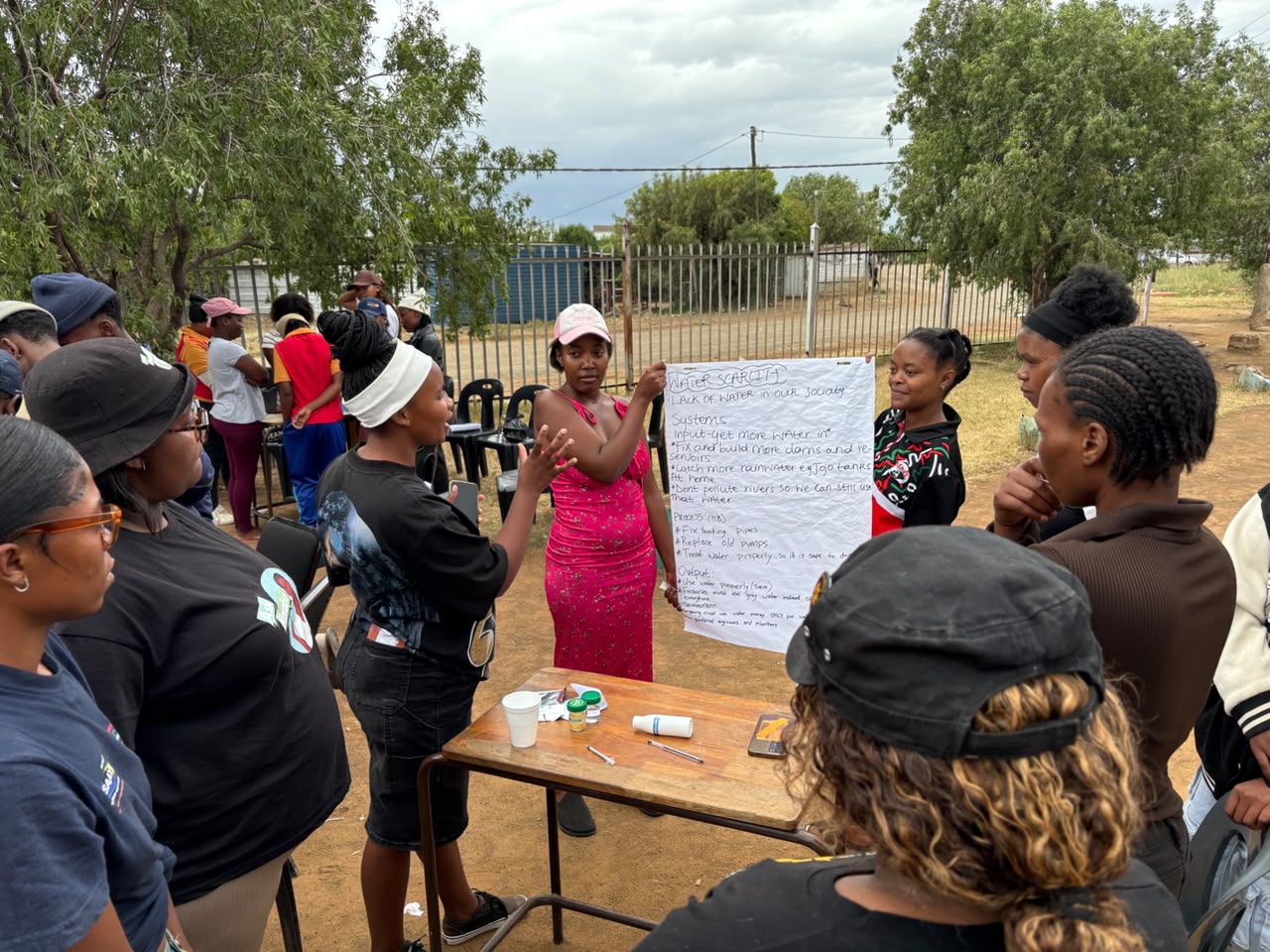
The event drew 67 community members, primarily young people, many of whom were vegetable farmers and community members keen on food security, environmental issues, and climate action. Attendees actively engaged in discussions and practical activities, highlighting their vital role in building climate-resilient communities.
In partnership with WaterCAN, represented by Lebohang Chabedi, participants engaged in Citizen Science Water Quality Testing. WaterCAN provided four testing kits, and participants were divided into groups for their own water testing. The results will be shared with the community after 72 hours, helping residents understand their water quality.
Lerato Matebese, from the Centre for Environmental Rights, introduced the Ask Karabo online tool, which aids communities in accessing environmental information and learning how to report violations. Participants also learned about Section 24 of the Constitution, which safeguards the right to a healthy environment.
Mokhele demonstrated practical techniques for documenting climate-related losses using smartphones. Farmers were encouraged to photograph their crops, record dates and timestamps, and consistently document changes and damage. This evidence will prove useful when seeking support during climate-related disasters.
Participants were split into groups to discuss topics such as livelihoods, water scarcity, environmental rights, and climate justice. They identified challenges within their communities and proposed potential solutions.
The event facilitated knowledge exchange between young people, farmers, civil society organizations, and government representatives, fostering discussions on practical responses to climate challenges. It also established commitments to follow up, particularly regarding the sharing of water testing results with the community.
“Our motivation was to take climate conversations beyond formal spaces and bring them directly to the people experiencing these challenges. We want young people to understand that they are not merely victims of climate change but are also knowledge holders, innovators, farmers, and active participants in developing solutions,” Mokhele concluded.
#BeTheFirstToKnow
To support Free State World and the work we do, donate to us here:
Grace T FIMS Pty LTD (company owning Free State World)
Capitec Bank Account (CAPITEC BUSINESS)
Account number: 1051608058
Account Type: Current Account
Business Branch Code:450105
Michael Tamelinth
Michael Tamelinth is a writer passionated about raw authentic stories that speaks to the heart and soul of a person.
Free State World is committed to accuracy, fairness and ethical journalism under the South African Press Code. If you spot an error of fact or wish to request an editorial clarification on this story, please contact our ombudsman desk directly at corrections@freestateworld.co.za.